
Skip to content
USE CASE · BUILD

Reduce 12 weeks of product delivery to 1 day

Engyn turns a product brief into a scoped, reviewed, tested release candidate in a day by running requirements, architecture, build, QA, documentation, security, and evidence work in parallel under human control.

ONE-DAY · ENGYNrelease candidate
00:00 · brief intakelocked
01:00 · PRD & scopeapproved
02:30 · architecture + backlogmapped
04:00 · build agents parallelizedactive
07:30 · QA suites generatedpassing
09:00 · docs + security evidenceattached
10:30 · human release reviewready
24h · release candidatepackaged
Scope · Build · Assure1 day
quality-gated fig_one-day-factory
// AT A GLANCE

A one-day release-candidate mission

  1. 01Lock the problem, audience, constraints, and non-goals
  2. 02Generate PRD, architecture notes, backlog, and acceptance tests
  3. 03Run build, QA, docs, and security workstreams in parallel
  4. 04Attach evidence from tests, reviews, and release checks
  5. 05Package a human-reviewed release candidate
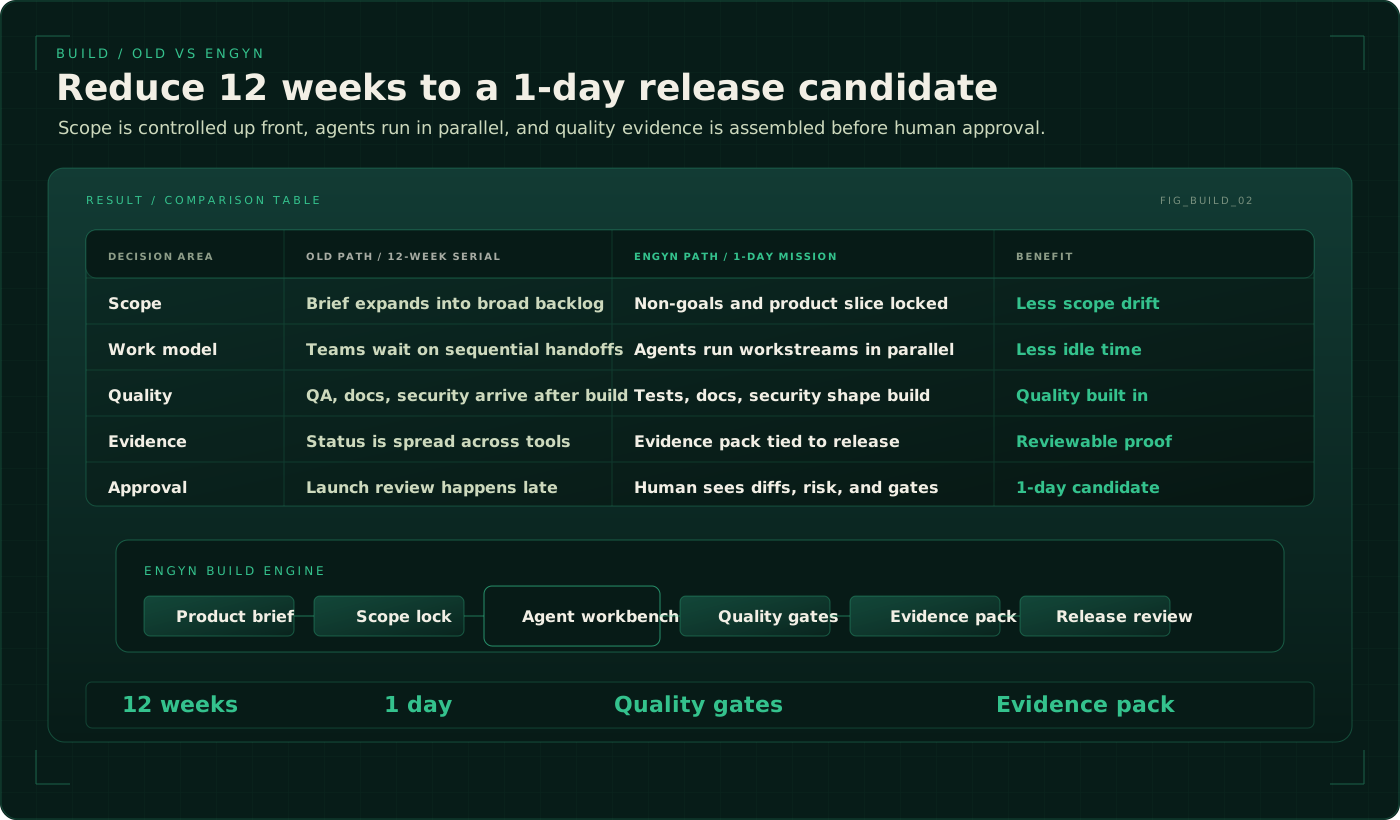
Old 12-week serial delivery path compared with Engyn one-day scoped release candidate path with QA, docs, security, evidence, and human review.
Old vs Engyn comparison - 12-week serial delivery versus a 1-day release-candidate mission.
12 weeks
Typical serial delivery cycle
1 day
Scoped release-candidate mission
Quality gates
Tests, security, docs, and review
Evidence pack
Traceability for every release decision

Illustrative modeled release-candidate outcome. Actual launch timing depends on product scope, integrations, compliance needs, and production approval requirements.

The speed does not come from skipping quality. It comes from removing idle handoffs, constraining scope, and letting specialized agents work in parallel while Engyn keeps every artifact tied to a human-approved mission.

// HOW IT WORKS

The one-day mission, end to end.

A product signal enters. Engyn freezes the scope, decomposes the work, runs agents in parallel, collects evidence, and hands humans a release candidate they can actually review.

Evidence console · Brief to release candidate

A one-day release candidate with quality evidence attached

scope locked / evidence live
01 / Inputs + mission frame
Product brief
intent + audience
Market signal
demand + timing
Constraints
non-goals + risk
Mission frame

Engyn narrows the brief into a releasable slice, acceptance criteria, architecture notes, and reviewable scope before agents begin parallel work.

02 / Agent workbench
PRDArchitectureBuildQASecurityDocsEvidenceRelease
Quality gates
G1 Scope approved
G2 Acceptance tests mapped
G3 Security checked
G4 Docs complete
03 / Evidence + decision
Release candidate
working slice
ready
Evidence pack
tests + review notes
attached
Launch plan
production assumptions
drafted
Human decision

Humans approve the release candidate after reviewing scope, diff, test results, security notes, documentation, and remaining launch assumptions.

§ 01

Overview

Traditional product delivery waits for one team to finish before the next team starts: research, PRD, backlog, architecture, build, QA, docs, security, release review. Engyn turns that serial chain into one governed mission so the same artifacts are produced together, checked continuously, and reviewed with evidence attached.

1 day from approved brief to tested release candidate

Illustrative modeled release-candidate outcome. Actual launch timing depends on product scope, integrations, compliance needs, and production approval requirements.

Who it is for
Startup foundersCTOsProduct managers and heads of productInnovation teamsEnterprise venture studiosClient-delivery software teams
§ 02

Problem

A 12-week plan usually contains only a few days of decisive work. The rest disappears into handoffs, interpretation gaps, waiting for specialists, rework after QA, and late evidence collection.

Pain points
  • Weeks spent turning an idea into a PRD that engineers and testers can act on
  • Backlog churn caused by unclear scope and missing acceptance criteria
  • Engineering, QA, documentation, and security work starting too late
  • Quality gates discovered after build decisions are already expensive to reverse
  • Status reporting based on meetings instead of live delivery evidence
  • Release readiness assembled manually at the end
§ 03

Why current approaches fail

  • Teams treat product definition, implementation, QA, documentation, and release governance as separate projects.
  • Generic code assistants can create output, but they do not preserve the delivery chain from intent to evidence.
  • Product scope grows while teams wait, turning a releasable slice into a vague platform bet.
  • Quality is framed as inspection after the build rather than constraints that shape the build from the first hour.
§ 04

How Engyn works

Engyn starts by making the mission small enough to finish and serious enough to trust. It locks non-goals, acceptance criteria, architecture constraints, quality gates, and release evidence up front. Then specialized agents work in parallel across requirements, implementation, tests, documentation, security checks, and reporting while humans approve the scope, risk, and release decision.

§ 05

Mission workflow

  1. 01 00:00-00:45 · Intake the product opportunity, constraints, and success measures
  2. 02 00:45-02:00 · Produce the PRD, scope boundary, non-goals, and acceptance criteria
  3. 03 02:00-03:30 · Generate architecture notes, backlog units, risks, and test strategy
  4. 04 03:30-08:30 · Run build, QA, documentation, and security agents in parallel
  5. 05 08:30-10:00 · Reconcile code, tests, docs, traceability, and release notes
  6. 06 10:00-11:00 · Run release-readiness, security, accessibility, and evidence checks
  7. 07 11:00-12:00 · Human review of scope, risk, diffs, test results, and launch plan
  8. 08 By 24h · Package the reviewed release candidate and evidence pack
§ 06

Agent roles

Product Strategist Agent

Locks the opportunity, users, non-goals, and measurable outcome.

Requirements Agent

Creates the PRD, stories, acceptance criteria, and traceability links.

Architecture Agent

Defines system boundaries, integration assumptions, and risk notes.

Build Agent

Implements the scoped slice and keeps diffs aligned to approved requirements.

QA Agent

Generates and runs unit, integration, acceptance, and regression checks.

Security Agent

Checks dependency, auth, data, and policy risks before release review.

Documentation Agent

Produces launch notes, runbooks, API notes, and user-facing docs.

Evidence Agent

Assembles test results, approvals, risks, and decision records for humans.

§ 07

Governance & audit controls

Governance, audit, QA & release controls
  • Human approval before scope lock and before release-candidate packaging
  • Traceability from brief to PRD, backlog, code, tests, docs, and evidence
  • Quality gates for acceptance tests, security checks, documentation, and release readiness
  • Code-review requirement before merge or candidate handoff
  • Risk notes and production assumptions visible in the launch plan
  • Evidence pack attached to the final human review
  • Change history retained by mission for audit and future iteration
§ 08

Business outcomes

  • Shorter path from approved idea to reviewed release candidate
  • Higher quality because tests, docs, security, and acceptance criteria shape the build
  • Less coordination overhead and fewer idle handoffs
  • Clearer delivery accountability with evidence attached to every decision
  • A launch plan that makes remaining production approvals explicit
Before

A founder brief moves through separate PRD, backlog, build, QA, documentation, security, and release-readiness steps, with intent diluted at every handoff.

After

The same brief becomes one approved mission with synced requirements, architecture, code, tests, docs, security checks, evidence, and a reviewed release candidate.

// RELATED

Related use cases.

// BUILD

Reduce 12 weeks to a 1-day release candidate

Turn product ideas into scoped missions with working software, tests, docs, security checks, and release evidence ready for human review.