
Skip to content
USE CASE · ASSURE

Continuous QA from requirement to release

Move from late-stage testing to continuous, evidence-backed quality control. Engyn designs tests, tracks traceability, analyzes risk, and supports go / no-go decisions on every release.

ASSURE · ENGYNmission
§ 01 · Overview
§ 02 · Problem
§ 03 · Why current approaches fail
§ 04 · How Engyn works
§ 05 · Mission workflow
§ 06 · Agent roles
§ 07 · Governance & audit
§ 08 · Business outcomes
Govern · Map · Measure~81%
governed-mission fig_continuous-qa
// AT A GLANCE

A governed quality mission

  1. 01Trace requirements to scenarios
  2. 02Generate BDD and automation
  3. 03Run UI / API / a11y / visual checks
  4. 04Cluster defects and score risk
  5. 05Decide go / no-go with evidence
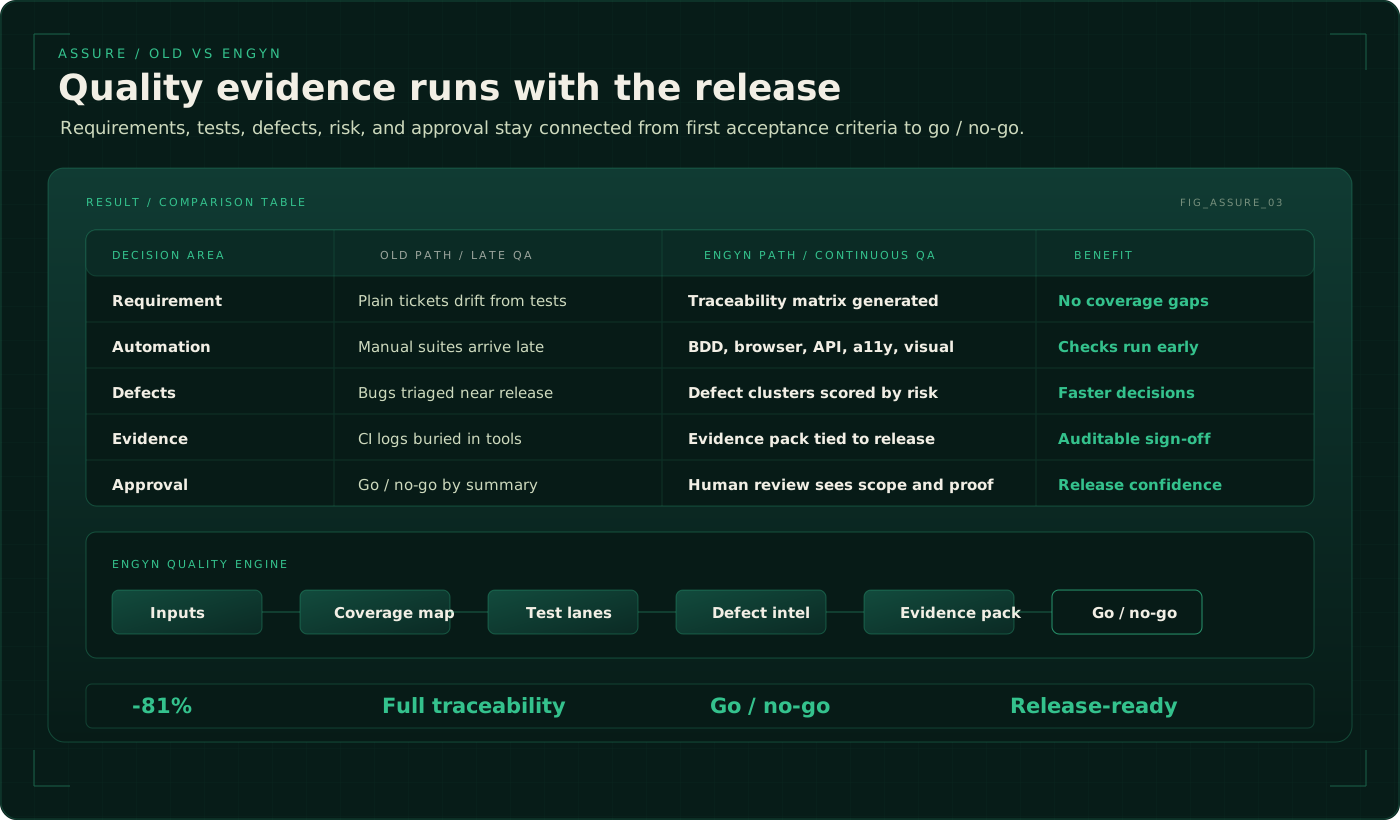
Old late-stage QA path compared with Engyn requirement-to-evidence quality control using coverage, automation, defect intelligence, and go/no-go review.
Old vs Engyn comparison - late QA after build versus requirement-to-evidence quality control.
−81%
Illustrative defect reduction
Full traceability
Requirement → evidence
Go / no-go
Evidence-backed decision
Release-ready
One auditable view

Illustrative modeled outcome. Not a verified customer result unless supported by approved evidence.

From the outside, delivery looks faster. Inside Engyn, every step is planned, governed, reviewed, tested, and signed off before release.

// HOW IT WORKS

The governed mission, end to end.

A requirement enters with acceptance criteria. Engyn generates traceability, runs automated checks, captures evidence, and turns release risk into a clear decision.

Evidence console · Requirement to release decision

A release-readiness console from requirement to go/no-go

coverage live / risk scored
01 / Inputs + mission frame
Requirement
source intent
Acceptance criteria
test rules
Target environment
release surface
Mission frame

Engyn keeps requirements, generated tests, CI evidence, defect clusters, and release risk in one auditable quality view.

02 / Agent workbench
TraceabilityBDDBrowserAPIA11yVisualDefectsRelease
Quality gates
G1 Coverage complete
G2 Automation passing
G3 Defects triaged
G4 Risk accepted
03 / Evidence + decision
Evidence pack
runs + traces
ready
Defect cluster
severity + owner
scored
Release decision
go / no-go
queued
Human decision

Humans approve go, conditional go, or no-go with visible traceability from each requirement to the evidence behind the release decision.

§ 01

Overview

Move from late-stage testing to continuous, evidence-backed quality control with traceability, automation, and go / no-go release readiness.

~81% defect reduction

Illustrative modeled outcome. Not a verified customer result unless supported by approved evidence.

Who it is for
QA and test managersHeads of qualityEngineering managersRelease managersProduct ownersRegulated delivery teams
§ 02

Problem

Quality signals often arrive too late, too manually, and without enough traceability to support confident release decisions.

Pain points
  • Requirements and tests drift apart
  • Manual test design is slow
  • Browser, API, accessibility, and visual checks are fragmented
  • Evidence is buried inside CI jobs
  • Go / no-go decisions rely on gut feel or spreadsheet summaries
§ 03

Why current approaches fail

  • QA is inserted as a phase instead of a continuous delivery capability.
  • Business expectations are not converted into executable specs early enough.
  • Automation suites lack the context to stay meaningful.
  • Accessibility and visual checks are treated as bolt-ons.
  • Release approval lacks one evidence spine to reason about.
§ 04

How Engyn works

Engyn links requirements to executable scenarios, generates and maintains test assets, pulls evidence from browser / API / accessibility / visual runs, clusters defects by risk, and assembles a release-readiness view that supports explicit go / no-go decisions.

§ 05

Mission workflow

  1. 01 Capture the requirement and acceptance criteria
  2. 02 Derive the BDD and scenario inventory
  3. 03 Generate browser, API, accessibility, and visual checks
  4. 04 Execute in CI and target environments
  5. 05 Attach traces, reports, screenshots, and defect analysis
  6. 06 Score release risk
  7. 07 Human go / no-go review
  8. 08 Release-ledger update
§ 06

Agent roles

Traceability Agent

Requirement-to-test mapping and coverage gaps.

Scenario Design Agent

BDD and edge-case generation from acceptance criteria.

Automation Agent

Browser and regression automation (Playwright).

API QA Agent

Endpoint and contract checks.

Accessibility Agent

Automated WCAG scans plus manual-review prompts.

Visual QA Agent

Screenshot baseline and diff management.

Defect Analyst Agent

Clustering, severity, and risk interpretation.

Release Evidence Agent

Evidence-pack compilation and approval summary.

§ 07

Governance & audit controls

Governance, audit, QA & release controls
  • Coverage thresholds by requirement and risk tier
  • Environment provenance on every run
  • Trace and report retention
  • Defect waivers recorded with approver identity
  • Accessibility exceptions time-boxed and documented
  • Explicit human go / no-go decision
  • Immutable release summary linking scope to evidence
QA coverage
Requirement traceabilityBDD coveragePlaywright browser automationAPI & contract testingRegression testingAccessibility testing (automated + manual)Visual regression testingDefect analysis & risk scoringEvidence-backed go / no-go readiness
§ 08

Business outcomes

  • Lower escaped-defect risk
  • Faster feedback to engineering
  • Stronger evidence quality
  • More credible release approvals
  • Better collaboration across product, engineering, and QA
Before

Requirements live in one system, tests in another, CI logs in a third, and release approval is a meeting with incomplete visibility.

After

Each release shows mapped requirements, generated and executed checks, trace files, HTML reports, accessibility findings, visual diffs, defect clustering, and one auditable approval view.

// RELATED

Related use cases.

// ASSURE

Continuous QA from requirement to release

Make every release a decision backed by evidence — traceability, automated checks, and a clear go / no-go on demand.